Inside Kotumsar's Lightless World: Speleology, Stalactites, and Blind Aquatic Life
Subterranean Expedition Facts
"Thirty-five meters below the forest canopy of Kanger Valley, sunlight is an alien concept. In this perpetual obsidian darkness, life does not perish—it strips away its eyes, sharpens its tactile senses, and thrives."
The Threshold of Darkness
As you step off the forest pathway in Kanger Valley National Park and descend the narrow masonry stairs into Kotumsar Cave, the tropical heat of Bastar evaporates within seconds. The ambient air cools rapidly to a steady 28°C, while relative humidity climbs toward 100%. Natural light shrinks into a distant, blinding needlepoint behind you, swallowed by immense vaults of moist limestone.
First discovered by tribal hunters who referred to it as Gopansar ("the hidden cavern") and later mapped systematically in the mid-20th century by geographer Prof. Shankar Tiwari, Kotumsar Cave is recognized as India's second-longest natural subterranean cave system. Carved into Precambrian limestone beds over hundreds of millions of years by subterranean watercourses, it remains one of the world's most extraordinary speleological laboratories.
Architecture in Calcite: Stalactites and Millimeter Epochs
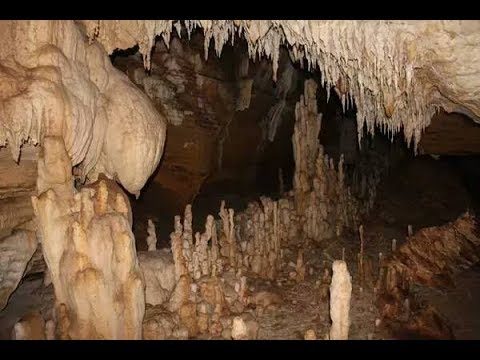
Inside Kotumsar's vaulted halls, nature creates architecture at a geological crawl. Rainwater filtering down through the forest soil above absorbs carbon dioxide, forming a mild carbonic acid that dissolves limestone (calcium carbonate). As this mineral-laden water drips from the cave ceiling, it leaves behind microscopic deposits of calcite.
Over thousands of years, these descending mineral formations create hollow straws and massive, fluted stalactites that hang like stone chandeliers. Where the drips strike the cave floor below, mineral mounds rise as blunt stalagmites. In several chambers, these two ancient sentinels have fused together to form continuous, monolithic pillars that appear to hold up the Earth's crust.
One of the cave’s most sacred natural features is a colossal limestone pillar reverently called the Patal Shivling, where indigenous pilgrims and visitors quietly gather to observe mineral formations that have grown uninterrupted since the dawn of the Holocene.
The Evolutionary Marvel: Blind Cave Fish and Cricket Ghosts
While the cave's mineral formations are visually mesmerizing, its biological residents represent a masterclass in extreme evolutionary adaptation:
- The Blind Cave Loach (Indoreonectes evezardi): Trapped in the cave's permanent subterranean pools during prehistoric geological shifts, these remarkable fish evolved over millions of years without light. Having no use for vision, their eyes degenerated completely and are now covered by skin. In place of sight, their lateral line systems and sensory barbels became hyper-sensitive, detecting microscopic vibrations in the crystal-clear, mineral-dense water.
- Kempiola shankari (Translucent Cave Cricket): Named after explorer Dr. Shankar Tiwari, this troglobitic cricket species possesses elongated antennae that stretch twice the length of its body, functioning as sensory radars in total darkness. Their exoskeletons are pale and devoid of protective UV melanin.
- Microchiroptera (Cave Bats): Thousands of insectivorous bats roost in the upper ceiling crevices, their daily nocturnal foraging flights providing the organic nutrient influx that sustains the cave's delicate food pyramid.
Speleological Etiquette and Conservation
Because Kotumsar is an irreplaceable ecological sanctuary, the Chhattisgarh State Forest Department and local indigenous eco-guides maintain strict preservation protocols:
- No Flash or Torchlight Directed at Wildlife: The blind fish and subterranean crustaceans suffer extreme disorientation and stress when subjected to high-lumen flash photography.
- Touching Formations is Strictly Forbidden: Skin oils from human fingers create an impervious layer on the limestone, permanently halting the microscopic mineral accretion process and killing the active stalactite.
- Monsoon Inundation: Every year between June and October, torrential monsoon rains cause underground groundwater tables to surge, filling the lower cave chambers with rushing water. During this period, the cave is closed to ensure human safety and allow the subterranean ecosystem to reset naturally.
Experience Kotumsar with Trips N Trippers
Trips N Trippers includes private, guided Kotumsar Cave speleological excursions on our flagship 5-Day Bastar & Kanger Valley Circuit. Our guests are accompanied by certified forest eco-naturalists equipped with professional solar torches, ensuring a safe, informative, and deeply respectful journey into Central India's subterranean realm.
Frequently Asked Questions
How deep and long is Kotumsar Cave? expand_more
What is unique about the blind fish found in Kotumsar Cave? expand_more
When is Kotumsar Cave open for tourists? expand_more
Is Kotumsar Cave safe for senior citizens and children? expand_more
Descend into Kanger Valley's Subterranean Wonders
Pair your Kotumsar Cave exploration with Tirathgarh cascades, Chitrakote Falls boat safaris, and authentic Dhurwa homestays with Trips N Trippers.